Bechoros Daf 43

Sun, Nov 1, 7:40 AM · Torah & Religion, Safety & Alerts
Bechoros Daf 43
The Daf moves from Mumim of animals to Mumim that can disqualify a Kohen from performing the Avodah. Many Mumim apply to both animals and people, learned through a Gezeirah Shavah. However, certain defects are unique to animals, while others relate specifically to the human body.
The Torah separately teaches Mumim regarding a Kohen, a Bechor and other Kodshim. The Gemara explains that none can simply be learned from the others: a Bechor has Kedushah automatically from birth, other Kodshim have their own broader Kedushah, and Kohanim have their unique Mitzvos and status.
A major principle is that a Kohen must be Shaveh B’Zaro Shel Aharon – have the normal physical form of Aharon HaKohen’s descendants. The Daf distinguishes between a genuine Mum, an abnormality that makes someone not Shaveh B’Zaro Shel Aharon, and a lesser issue of Maris Ayin. A genuine Mum can invalidate the Avodah, while the other categories do not necessarily do so after the fact.
The Mishnah lists unusual physical formations, including abnormal shapes of the head, an unusually short or long neck, and a hunchback. The Gemara distinguishes between a hunch involving the actual skeletal structure and one consisting merely of flesh.
The Daf also discusses baldness. Different patterns of remaining hair can affect the Halachah, including whether hair remains in front, behind, or in both areas. Rabbi Yochanan additionally discusses unusually short people and someone whose eyes constantly water.
Finally, missing eyelashes are specifically described as an issue of Maris Ayin. The next Mishnah begins discussing Kohanim with missing or unusually positioned eyebrows, and Rebbi Chanina ben Antignos adds the extraordinary case of someone with two backs and two spinal columns.
Iliui mishmas Imi morosi Ruth bas Harav Menachem Mendel
Chabad at UCF brought the energy before Friday night’s Space Game against Baylor. Students and community members gathered for a tailgate on campus as Knight Nat…
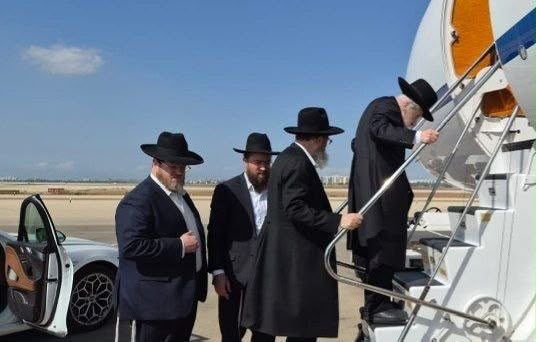
רבי דוב לנדו שליט"א בעלייה למטוס במסעו לחו"ל להצלת עולם התורה.